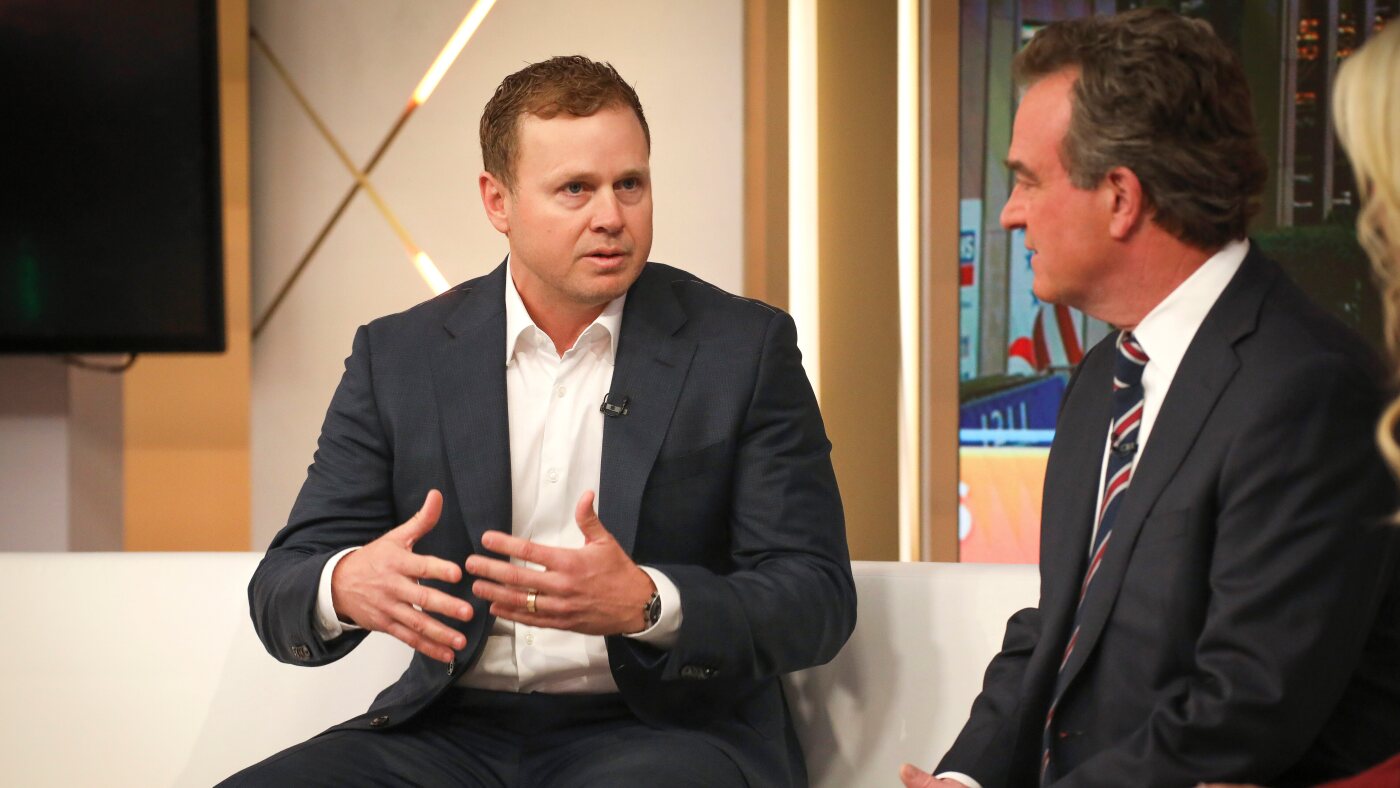
Investors can explore detailed stock insights including earnings analysis, valuation metrics, and market momentum indicators across listed companies. Former reality TV star Spencer Pratt is leveraging edgy humor, AI-generated content, and combative rhetoric on social media to build attention for a potential Los Angeles mayoral bid. Political experts suggest this approach could represent the future of online campaigning, with implications for how platforms drive engagement and political advertising revenue.
Live News
historical data The role of analytics has grown alongside technological advancements in trading platforms. Many traders now rely on a mix of quantitative models and real-time indicators to make informed decisions. This hybrid approach balances numerical rigor with practical market intuition. Spencer Pratt, best known for his role on the reality series The Hills, has been flooding social media platforms with a mix of provocative humor, AI-generated "slop," and confrontational posts. His goal, according to the NPR report, is to capture the attention of the "very online" electorate and secure votes for a potential run for mayor of Los Angeles. Pratt’s strategy — described as "winning the internet" — relies on high-frequency, low-cost content that triggers algorithmic amplification. The combative tone and edgy humor are designed to spark shares, comments, and reactions, effectively turning his personal brand into a campaign engine. Some political experts cited in the report view this tactic as a blueprint for future digital campaigning, where authenticity is secondary to virality. The approach highlights a growing intersection between entertainment, technology, and politics. Pratt’s use of AI-generated material further underscores the role of emerging tools in crafting political messages. While the article does not specify exact metrics of his online engagement, the characterization of his success suggests significant activity across platforms.
Spencer Pratt's Online Campaign Strategy May Reshape Political Engagement and Social Media MonetizationMarket anomalies can present strategic opportunities. Experts study unusual pricing behavior, divergences between correlated assets, and sudden shifts in liquidity to identify actionable trades with favorable risk-reward profiles.Real-time market tracking has made day trading more feasible for individual investors. Timely data reduces reaction times and improves the chance of capitalizing on short-term movements.Technical analysis can be enhanced by layering multiple indicators together. For example, combining moving averages with momentum oscillators often provides clearer signals than relying on a single tool. This approach can help confirm trends and reduce false signals in volatile markets.
Key Highlights
historical data Timing is often a differentiator between successful and unsuccessful investment outcomes. Professionals emphasize precise entry and exit points based on data-driven analysis, risk-adjusted positioning, and alignment with broader economic cycles, rather than relying on intuition alone. - High-engagement, low-cost content: Pratt’s strategy relies on posts that generate organic shares and comments, reducing the need for traditional paid advertising. This model could appeal to other candidates with limited budgets. - Rise of AI in campaigns: The use of AI-generated “slop” may lower the barrier to producing campaign content, potentially leading to a flood of automated or semi-automated messages across social feeds. - Algorithmic favoritism: Social media algorithms often prioritize provocative and divisive content to maximize user time on site. Pratt’s combative rhetoric aligns with this incentive structure, likely boosting his visibility. - Regulatory considerations: As candidates adopt edgier, potentially misleading tactics, regulators and platform moderators may face pressure to update policies around political content, especially content generated by AI. - Monetization implications: Increased political engagement could drive higher advertising revenue for platforms, but also raise risks of brand-unsafe environments that may deter conventional advertisers.
Spencer Pratt's Online Campaign Strategy May Reshape Political Engagement and Social Media MonetizationData-driven insights are most useful when paired with experience. Skilled investors interpret numbers in context, rather than following them blindly.Many traders monitor multiple asset classes simultaneously, including equities, commodities, and currencies. This broader perspective helps them identify correlations that may influence price action across different markets.Some investors find that using dashboards with aggregated market data helps streamline analysis. Instead of jumping between platforms, they can view multiple asset classes in one interface. This not only saves time but also highlights correlations that might otherwise go unnoticed.
Expert Insights
historical data Access to futures, forex, and commodity data broadens perspective. Traders gain insight into potential influences on equities. From a professional perspective, Pratt’s campaign strategy suggests a shift in how political candidates may allocate resources. Rather than relying on traditional media buys or grassroots organizing, a candidate could focus on creating viral moments that are organically amplified. This could reduce the cost of entry for political newcomers but also increase the noise and potential for disinformation. For social media platforms, such campaigns might boost user engagement metrics and time spent on site, which are closely tied to advertising revenue. However, the combative and often unverified nature of AI-generated content could complicate content moderation efforts and expose platforms to political scrutiny. Companies like Meta Platforms and X (formerly Twitter) may face pressure to enforce stricter rules on AI-generated political ads, similar to recent regulations in the European Union. Investors watching the intersection of media and technology should note that while Pratt’s tactic may be novel, its scalability remains uncertain. If his approach becomes a template, the market for political social media consulting and AI content tools could expand. Conversely, a backlash from voters or regulators could temper adoption. The financial impact on social media companies would likely be mixed: higher short-term engagement versus long-term moderation costs and reputational risk. Analysts may monitor platform policy changes and political ad spending trends in the 2025 election cycle for clues about durability of this strategy. Disclaimer: This analysis is for informational purposes only and does not constitute investment advice.